Resistors are used to pull up or down the pin to which a switch is connected, to ensure that the pin never floats. (in this way it will allways be either HIGH or LOW, dependin on the switch status)
There may be inconsistency in using the switch. Your device may be 'hung' between on and of or produce on when not pushed.
Quite true, but technically; it's more about the logic state of the GPIO itself... known as a "floating" pin, and this holds true for any device connected to a logic level pin.
Why does the pushbutton float? Is it a characteristic property of it? Or is it that sometimes the contact might be made accidentally, even when not pressing the button?
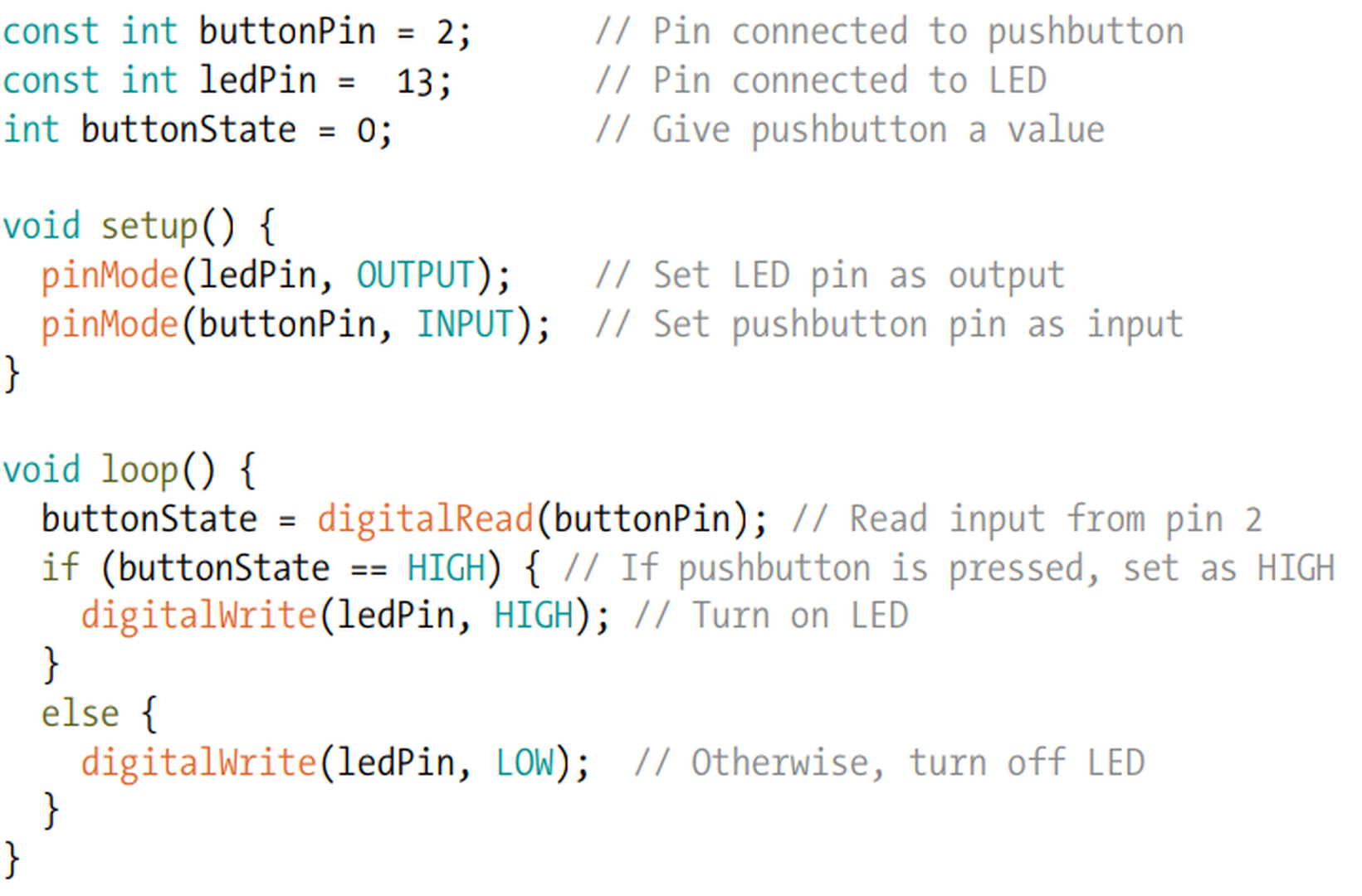
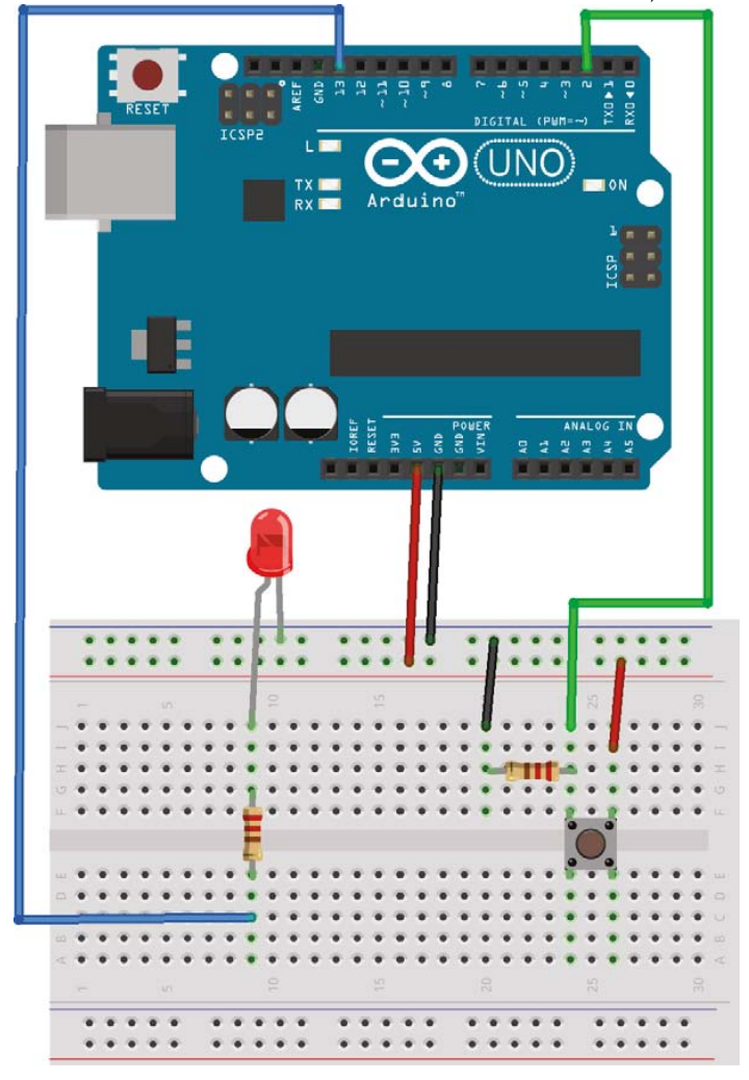
I used the following sketch for switching on and off an LED. It uses a resistor with the pushbutton. Then, is it pull up resistor or pull down resistor?
Why does the pushbutton float? Is it a characteristic property of it? Or is it that sometimes the contact might be made accidentally, even when not pressing the button?
No, it's not the button... it's all got to do with the logic level voltages supplied to the pin.
For digital pins to operate properly, the logic level voltages applied to them must fall within their specified ranges. Without pull-up or pull-down resistors, the logic level cannot be properly determined, therefore is knows as a floating pin.
I used the following sketch for switching on and off an LED. It uses a resistor with the pushbutton. Then, is it pull up resistor or pull down resistor?
You can check it for yourself with a Serial.print... statement in your setup function.
Learning to do this is a valuable debugging technique, and worth getting used to.
@frogandtoad Thank you so much for answering my question and for the proper explanation. I was struggling to understand this for a long time. Thanks again 😀
We use cookies on the DroneBot Workshop Forums to give you the most relevant experience by remembering your preferences and repeat visits. By clicking “Accept”, you consent to the use of ALL the cookies.
This website uses cookies to improve your experience while you navigate through the website. Out of these, the cookies that are categorized as necessary are stored on your browser as they are essential for the working of basic functionalities of the website. We also use third-party cookies that help us analyze and understand how you use this website. These cookies will be stored in your browser only with your consent. You also have the option to opt-out of these cookies. But opting out of some of these cookies may affect your browsing experience.
Necessary cookies are absolutely essential for the website to function properly. This category only includes cookies that ensures basic functionalities and security features of the website. These cookies do not store any personal information.
Any cookies that may not be particularly necessary for the website to function and is used specifically to collect user personal data via analytics, ads, other embedded contents are termed as non-necessary cookies. It is mandatory to procure user consent prior to running these cookies on your website.